
【Report】Life after the Earthquake: Experiences of Adolescents and Their Households in San Remigio, Cebu, Philippines (Maricor Carmela Amoguis IEIRI)
2026.3.22
日本語研究活動
Life after the Earthquake: Experiences of Adolescents and Their Households in San Remigio, Cebu, Philippines
Maricor Carmela Amoguis IEIRI (Department of Human Ecology, School of International Health, Graduate School of Medicine, The University of Tokyo)
Keywords: earthquake, food security, livelihood, adolescents, households, Philippines
Abstract
Disasters such as earthquakes can affect households through multiple direct and indirect pathways. Damage to infrastructure and disruptions to livelihoods and income sources can compromise household food security and access to food. These challenges may affect food availability, ultimately influencing dietary patterns and nutritional status. This report describes household experiences following the earthquake that affected San Remigio, a rural community in Cebu, Philippines. The third wave longitudinal study documents changes in livelihoods, food access, and daily life five months after the disaster. The findings illustrate how households coped with these challenges and highlight the potential implications for adolescents’ diet and nutrition in this vulnerable community.
Background and study overview
On September 30, 2025, at 21:59, a magnitude 6.9 earthquake struck the city of Bogo, Cebu, about 8 kilometers away from our study area, San Remigio. The earthquake caused widespread damage to public infrastructure, schools, commercial establishments, and private homes (Department of Social Welfare and Development, 2025). Several buildings in the area were declared unsafe, and many residents experienced disruptions to their livelihoods and daily activities. Numerous aftershocks recorded in the following weeks affected local services and economic activities, creating challenges for households as they recovered from the disaster.
This survey represents the third wave of a longitudinal study conducted in San Remigio that began in 2018, with a second wave completed in 2022 during the later phase of the COVID-19 pandemic. The study aims to investigate how changes in household food security, socioeconomic conditions, and disaster experiences influence adolescents’ diet and nutrition over time. In this third wave, the index participants are now in late adolescence to early adulthood (14–21 years old). Data were collected through household visits and interviews covering diet, food security experiences, household socioeconomic characteristics, and recent disaster impacts. Fieldwork was conducted approximately five months after the earthquake affected the municipality.
Field observations after the earthquake
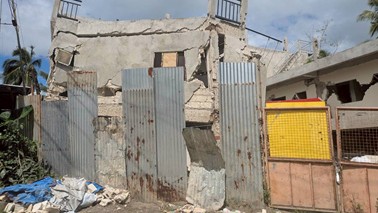
The earthquake caused visible damage to infrastructure, commercial establishments, and private properties across the municipality. The municipal hall also sustained damage following the quake. Five months later, some buildings and classrooms at San Remigio National High School in the town center were still considered unsafe. As a result, some classes were held in open grounds, and shift schedules were implemented to accommodate the number of students. Several commercial establishments remained closed and were still undergoing repairs.
Households experienced limited access to shelter, water, electricity, and communication lines. Participants in our study described sleeping outside their homes using tents and mats due to safety concerns and strong aftershocks. They also reported livelihood disruptions in the weeks following the earthquake. Access to markets was limited due to road damage, livelihood disruptions, safety concerns, and reduced household income. When asked about food security, both adolescents and their parents or caregivers reported worrying about food, reducing the quantity and quality of dietary intake due to the challenges they faced immediately after the earthquake.
Conclusion
Overall, the findings from this survey wave emphasize how the earthquake disrupted the daily lives of adolescents and their households in San Remigio. The reported challenges related to food access, livelihoods, and living conditions illustrate the ongoing recovery needs of affected communities. Continued monitoring through this longitudinal study will help us better understand how disasters faced by this vulnerable community affect adolescents’ diet and nutrition, as well as how they adapt and recover over time.
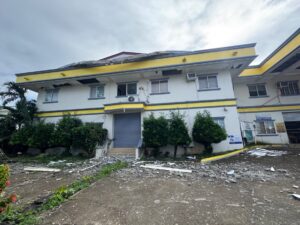
Figure 1. Damage to San Remigio municipal hall in the town center (Población).
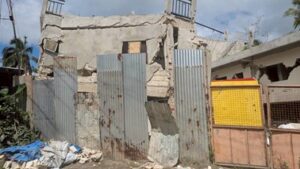
Figure 2. Damage to private properties in the town center.
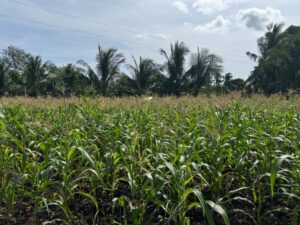
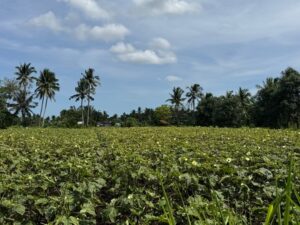
Figure 3. Corn and okra fields in Barangay Kayam, San Remigio, Cebu, reflecting local efforts to rebuild livelihoods and restore agricultural activities after the earthquake.
References
Department of Social Welfare and Development. (2025). DSWD DROMIC Report #31 on the Effects of Magnitude 6.9 Earthquake in the City of Bogo, Cebu (No. 31). https://dromic.dswd.gov.ph/wp-content/uploads/2025/10/DSWD-DROMIC-Report-31-on-the-Effects-of-Magnitude-6.9-Earthquake-in-the-City-of-Bogo-Cebu-as-of-19-October-2025-6PM.pdf