
【Report】Livelihood Changes in two Li Villages on Hainan Island: A Twenty-Year Follow-up Field Observation(HU Xinyu)
2026.3.30
日本語研究活動
Livelihood Changes in two Li Villages on Hainan Island: A Twenty-Year Follow-up Field Observation
HU Xinyu (Department of Human Ecology, School of International Health, Graduate School of Medicine, The University of Tokyo)
Keywords: Rural livelihoods, Wild edible plants, Dietary diversity, Areca nut cultivation, Market-integrated food systems
Abstract
This preliminary field survey presents a follow-up investigation conducted approximately twenty years after earlier field research in Li villages on Hainan Island by the Department of Human Ecology at the University of Tokyo. Drawing on field observations and interviews in Shuiman and Paori villages, it examines recent changes in livelihoods, land use, and food practices. The survey suggests that both villages have largely shifted away from subsistence grain farming toward greater market integration. However, their development trajectories seem to be diverging. Shuiman Village has developed a diversified livelihood structure shaped by tourism and nature conservation policies, whereas Paori Village has become increasingly specialized in areca nut cultivation. These observations provide insights into the adaptive strategies and potential vulnerabilities of rural communities amidst rapid socio-economic transition.
Background and Purpose
Between 2000 and 2005, as part of a collaborative project, the Department of Human Ecology at the University of Tokyo conducted fieldwork in specific Li ethnic communities on Hainan Island, China. The research documented the diverse livelihood adaptation strategies that emerged among different Li villages under the influence of national development policies and the expansion of the market economy. Previous studies have shown that, shaped by policies, geographical environments, and market opportunities, these villages gradually developed distinct trajectories.
Among them, Shuiman Village experienced significant transformations following the establishment of a nature reserve. Traditional slash-and-burn farming was prohibited, and villagers’ production activities gradually shifted toward paddy rice agriculture. At the same time, people continued to use edible wild plants collected from fields and surrounding areas as supplementary food sources, maintaining a livelihood pattern largely centered on subsistence.
In contrast, cash crops such as bananas, rubber, and longan were introduced to Paori Village at an earlier stage. As market opportunities expanded, villagers continuously increased the scale of commercial production, and the importance of traditional grain cultivation and livestock raising gradually declined.
We visited Shuiman Village for 2 days and Paori Village for 2 days in March 2026 to briefly revisit the developmental trajectories of these villages. Based on preliminary field observations and interviews, this report summarizes the changes in local livelihoods and land use over the past twenty years, and provides a basis for future research.
Field Observation
(1) Shuiman Village
Shuiman Village is located at the foot of the Wuzhishan mountains and has recently been incorporated into a nature reserve. According to an interview with a local villager, as farming profitability declined, rice cultivation was gradually abandoned around 2016. Some of the former paddy fields have been leased out, while others have been converted to the cultivation of cash crops such as tea and yizhi (Alpinia oxyphylla).
Meanwhile, the development of tourism has had a significant impact on village livelihoods. Since the village is situated within a broader scenic area that encompasses multiple villages, approximately 1,500 to 2,000 tourists visit the overall area daily during the peak season. Many households have begun operating agritourism businesses, selling local specialties, or setting up vendor stalls during holidays to supplement their income. With the rise in tourism, the village’s spatial organization has transformed, as former agricultural land is increasingly re-purposed for tourist facilities, such as parking lots, guesthouses, and dining areas.
Regarding diet, although villagers no longer cultivate staple grains, the practice of collecting wild plants from fields or roadsides as supplementary food still persists. For example, plants such as Leigonggen (Centella asiatica), which are often regarded as common “weeds,” still appear on everyday dining tables. As tourists have shown increasing interest in “local” foods, some of these wild vegetables are now intentionally cultivated or collected in larger quantities and incorporated into the menus of local restaurants. Food resources once gathered strictly for subsistence have thus transitioned into commercial commodities.
(2) Paori Village
Unlike the relatively diversified livelihood structure of Shuiman Village, agricultural production in Paori Village—characterized by flat terrain and contiguous farmland—is now highly concentrated on areca nut cultivation. According to interviews, the large-scale expansion of areca nut cultivation primarily took place prior to the COVID-19 pandemic. Although market conditions fluctuated during the pandemic, prices have rebounded over the past three years, making the crop highly lucrative once again—local villagers even refer to areca nuts as “golden fruit.”
In terms of production practices, the organization of agricultural labor has also changed. For instance, irrigation systems have been installed throughout the fields. Additionally, the harvesting of crops such as betel nuts is no longer done by the farmers themselves; instead, purchasing companies directly hire workers to harvest the mature fruit. As a result, the physical intensity that farmers need to invest in daily agricultural work has decreased. Furthermore, wet-rice cultivation ceased about five years ago due to disputes over land development contracts. Consequently, local residents now rely mainly on market purchases for their staple foods.
While traveling north from Sanya to Paori Village, we also observed that Areca Yellow Leaf Disease (AYLD) was quite severe in some areas along the way, although it has not yet become widespread in the immediate vicinity of the village. Although the current impact appears limited in the village, under a production system that relies heavily on a single crop, such potential ecological risks may create uncertainty for future income stability.
In terms of everyday life, the reduction in agricultural labor time appears to have created more space for social activities. During the field survey, we experienced the warm hospitality of the Li people and were invited to a communal meal that lasted from noon until evening. These gatherings featured homemade glutinous rice wine, traditionally crafted by local housewives. We observed an active local drinking culture where the villagers demonstrated a high tolerance for alcohol; in contrast, even a limited amount of the traditional brew was enough to cause me, as a visitor, to feel intoxicated. Additionally, through conversations with several elderly men, we noted distinct physical markers associated with long-term areca nut consumption, most notably the hypertrophy of the masticatory muscles (enlarged jaw muscles).
Conclusion
Observations from this revisit suggest that over the past two decades, both villages have largely transitioned away from traditional subsistence grain farming, with food acquisition becoming increasingly market-integrated. However, under differing geographical conditions and development opportunities, the two villages appear to have diverged, developing distinct livelihood and land-use patterns.
Under the combined influence of nature conservation policies and tourism development, Shuiman Village appears to have formed a diversified livelihood structure that includes specialty crop cultivation, tourism-related businesses, and the continued use of wild plant resources. In contrast, Paori Village seems to have strengthened a more concentrated production model centered on areca nut cultivation under strong market incentives.
Although this preliminary field survey cannot fully reconstruct the entire process of change, these concrete observations still provide useful insights into how rural communities adjust their livelihoods and lifestyles during a period of rapid socio-economic transformation.
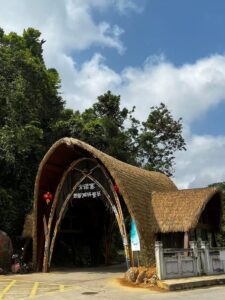
Figure 1. The main entrance to the Fangnuo Village Tropical Rainforest Scenic Area (March 2026), within which Shuiman Village is now located.
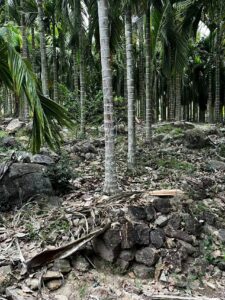
Figure 2. An intensive areca nut (Areca catechu) plantation observed in Paori Village (March 2026).
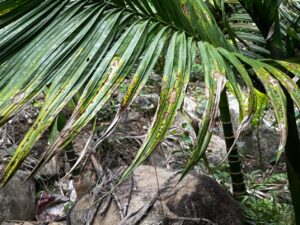
Figure 3. Areca palms infected with Yellow Leaf Disease (AYLD) observed in Sanya (March 2026).
References
[1] Jiang, H. W., & Umezaki, M. (2006). Inter-household variation in adoption of cash cropping and its effects on labor and dietary patterns: a study in a Li hamlet in Hainan island, China. Anthropological Science, 114(2), 165–173.
[2] Umezaki, M., & Jiang, H. W. (2009). Changing adaptive strategies of two Li ethnic minority villages in a mountainous region of Hainan Island, China. Southeast Asian Studies, 47(3), 348–362.